

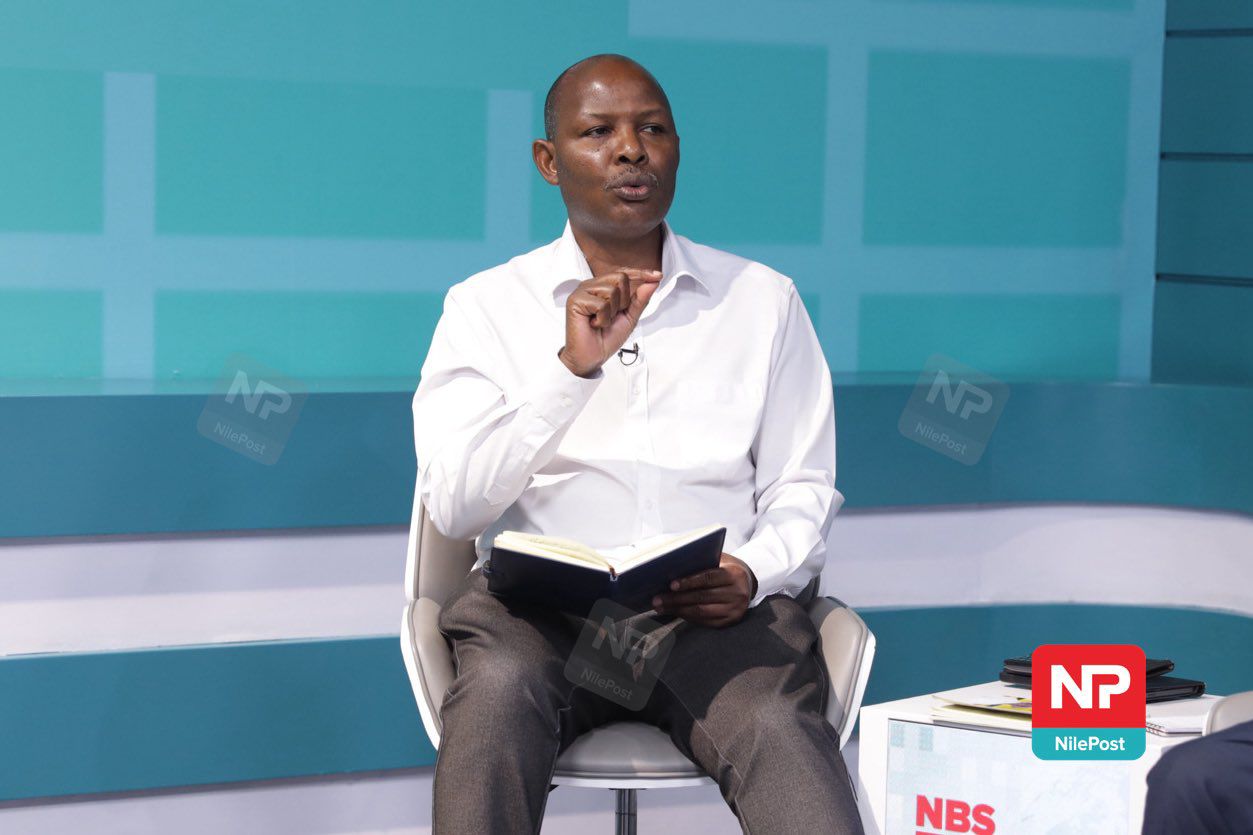
Political analyst Charles Rwomushana has described the recently concluded 2026 presidential election as a national referendum on President Yoweri Kaguta Museveni’s continued leadership, while also raising concerns about electoral credibility, particularly the failure of biometric voter verification kits (BVVKs).
Speaking on NBS Eagle on Sunday, Rwomushana argued that the election went beyond routine democratic competition and reflected a collective decision by Ugandans on whether Museveni should remain in power after decades at the helm.
“This 2026 election in which Yoweri Kaguta Museveni was voted on was a referendum on whether he should stay or go,” he said.
Rwomushana further alleged that Museveni’s victory was manipulated in Kampala during the 2021 general elections, a development he claims directly influenced the government’s push for biometric verification technology in subsequent elections.
“President Museveni was rigged in Kampala in 2021, hence the push for BVVK machines in the 2026 election. Had they worked well, he would have gotten over 90 percent of the vote,” he said.
According to Rwomushana, the ruling party viewed biometric voter verification as a tool to safeguard its electoral strength, particularly in urban opposition strongholds where previous results had cast doubt on the incumbent’s popular support.
However, the 2026 elections were marred by widespread technical failures of the BVVKs in several parts of the country. In many polling stations, the kits reportedly failed to start or function as intended.
In response, the Electoral Commission (EC) instructed all returning officers that where BVVKs failed, voting should proceed immediately using the manual voters’ register, in line with existing electoral guidelines.
While the EC maintained that this ensured continuity and avoided voter disenfranchisement, critics argue that reliance on manual systems undermined the intended transparency and integrity of the biometric process.
During the final announcement at the commission’s headquarters on Saturday, EC Chairperson Justice Simon Mugenyi Byabakama declared Museveni the winner of the 2026 presidential election.
According to the official tally, Museveni secured 7,946,772 votes, representing 71.65 percent of the total valid votes cast, extending his leadership to a seventh term in office.
His closest challenger, Robert Kyagulanyi Ssentamu—popularly known as Bobi Wine—running on the National Unity Platform (NUP) ticket, garnered 2,741,238 votes, accounting for 24.72 percent.
Nathan Nandala Mafabi of the Forum for Democratic Change (FDC) finished third with 209,039 votes, equivalent to 1.88 percent, while the remaining five candidates each received less than one percent of the vote.
